
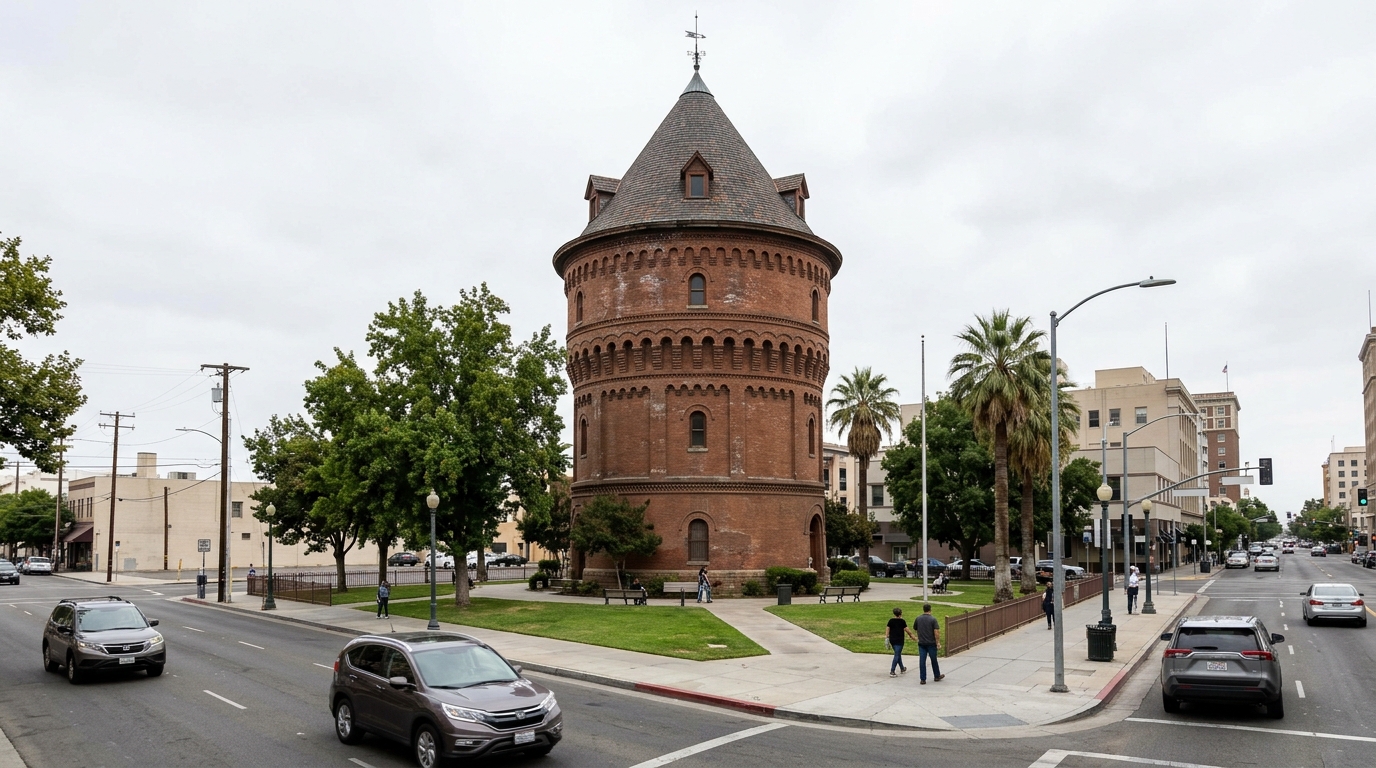
Old Fresno Water Tower history is more than a story about a distinctive building. The tower helps explain how a growing Central Valley city provided essential water service while developing a recognizable downtown skyline. Today, its brick silhouette also raises a larger question: how can public infrastructure remain meaningful after the technology and city around it change?
Fresno residents following demolition and rehabilitation debates in 2026 have good reason to revisit older landmarks. Buildings that once seemed ordinary may document an important chapter in civic life. The Old Fresno Water Tower offers a clear example because its original purpose, engineering and later symbolic value can be studied through historical records rather than neighborhood rumor.
Why the Old Fresno Water Tower Still Matters
The tower dates to the late nineteenth century, when dependable municipal infrastructure was central to Fresno’s expansion. An official National Register of Historic Places record identifies its engineering and architecture as significant. The familiar beehive form did not emerge as a decorative novelty; it reflected how builders organized a substantial elevated water-storage structure using the materials and construction knowledge available at the time.
A Utility Building That Became a Civic Landmark
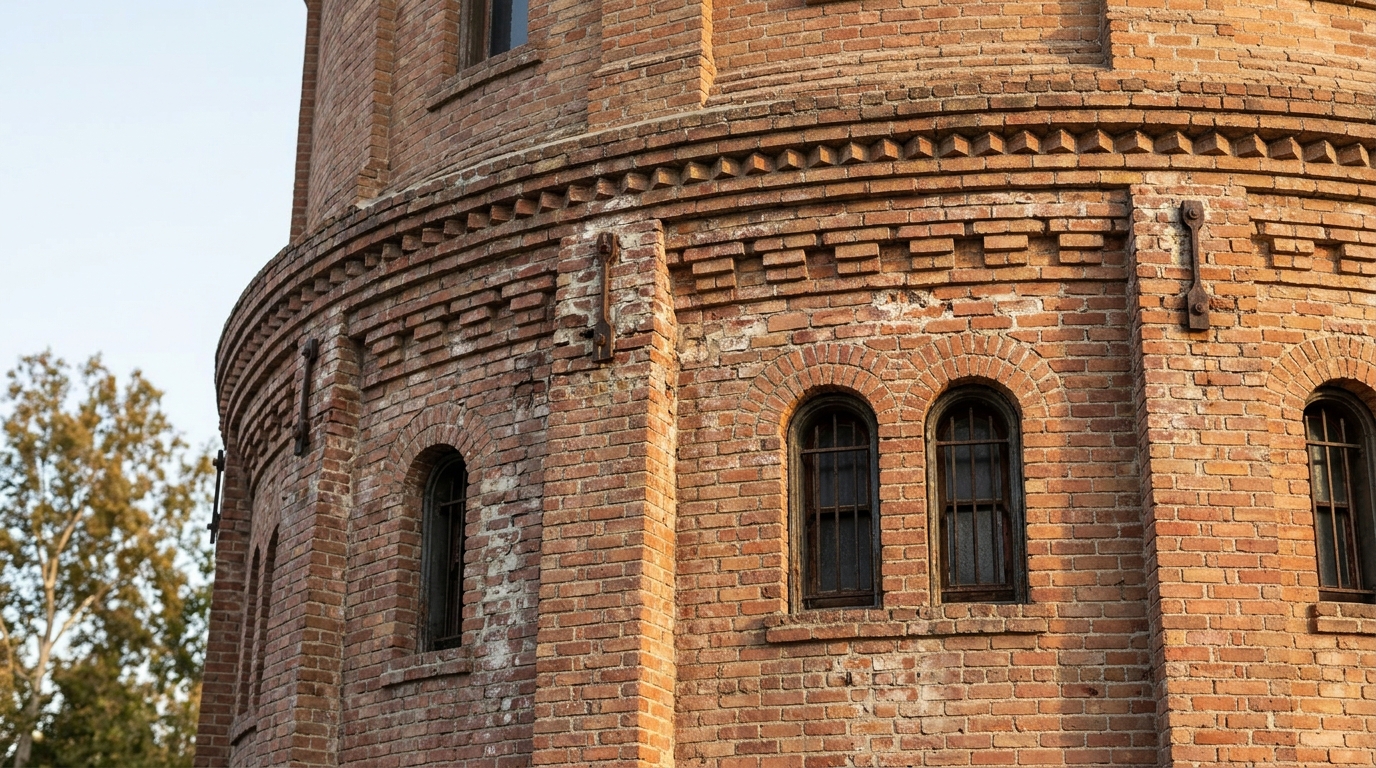
The historic record describes a brick tower roughly one hundred feet high, with a large elevated tank and walls arranged in a tapered profile. Those figures belong to the historic nomination, not a current engineering inspection. Anyone writing a modern conditions report should distinguish archived construction specifications from the building’s present operational state.
One way to appreciate the tower is to follow the path from necessity to identity. In the construction era, a water tower would have been judged by the practical service it delivered and the reliability of its structure. Later residents might see the same brickwork as a reminder of a particular moment in Fresno’s growth. Preservation discussions become clearer when both viewpoints appear in the story. The practical origin of a building does not diminish its architectural interest; it often explains why the form looks so unusual to a modern visitor.
Reading Its Distinctive Brick Architecture
Its visual character deserves a closer look. The curved mass, diminishing brick courses and strong vertical presence distinguish the tower from the storefronts around it. It is easy to photograph the exterior and forget that the original design answered practical questions about pressure, storage, access and maintenance. Industrial architecture often becomes celebrated only after those practical functions fade.
What the Historical Register Actually Documents
Historical listings can tell readers why a property mattered at the time of designation, but they cannot substitute for current ownership records, public access rules or rehabilitation reports. Research should separate the listing date, the construction date and any later adaptation. Combining those dates carelessly can make a compelling landmark story less trustworthy.
How Preservation Changes the Downtown Conversation
The same preservation questions affect other large Fresno properties. For comparison, our reporting on the former Fresno Bee printing plant follows a very different building whose value also connects to urban change. Reading these stories together shows why architectural appearance, community memory, structural condition and redevelopment goals deserve separate consideration.
Historical interpretation improves when writers distinguish a primary source from a repeated description. A historic designation record can establish the attributes considered significant when the property was nominated. An old newspaper may document public reaction. A city planning report may describe a later proposed reuse. None of these alone establishes every detail about the present building. Readers can compare the dates and purposes of those records to see where claims agree and where additional research is needed, particularly when discussing restorations, structural work, and property access.
The Tower in Fresno’s Larger Urban Story
Imagine a visitor standing at the tower and then walking toward older commercial blocks. The useful question is not just which building is oldest. It is how the tower fits into the former scale of public works, nearby streets, water distribution and downtown movement. Maps, dated photographs and property records help answer that question more convincingly than an unverified anecdote.
Researching and Visiting the Landmark Responsibly
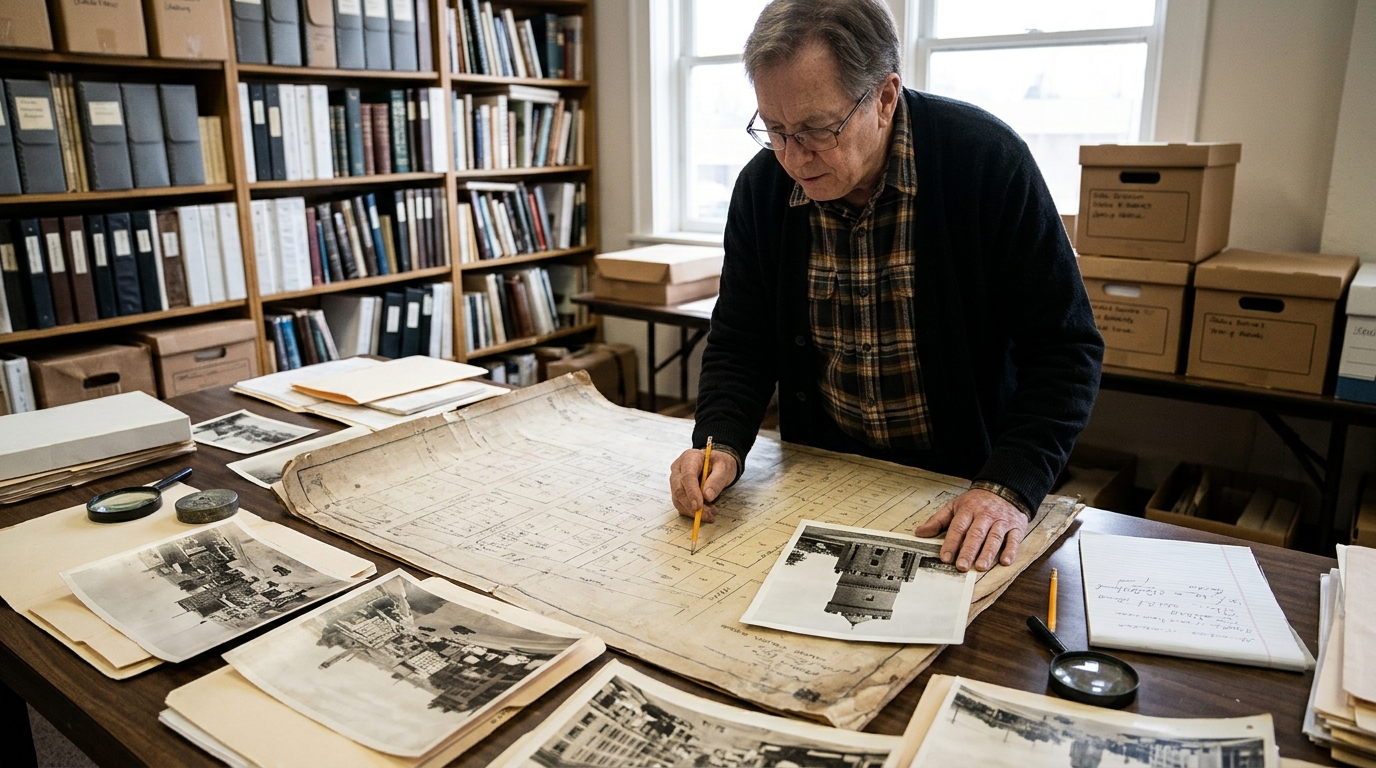
For local history content, a credible approach starts with what can be verified. The National Park Service listing provides a reliable archival anchor. City records and historical societies may add context about changing use and treatment of the site. Photographs can illuminate the surroundings, but a photo without a date should not be used to prove when a renovation occurred.
For an official reference, review National Park Service listing for the Old Fresno Water Tower. It provides a useful source to check alongside the practical guidance here. Confirm current information directly rather than relying on an undated copy or an unverified social post.
How to Connect a Building to Community History
Researchers should begin with the exact landmark name and street location, save the official listing, then compare descriptions across archives. If a source gives a different completion year, examine whether it is discussing planning, construction or dedication. Document differences openly. They can be valuable evidence of how local stories develop.
For a neighborhood walking project, create a small field notebook with a map, a few archival photographs, and three questions about each stop. Ask what the structure was built to do, what changes are visible, and which records could explain the changes. Note visible materials without guessing about hidden structural conditions. This method gives students and residents a way to understand downtown Fresno as a sequence of decisions, rather than a collection of photo opportunities. Respect private property, marked closures, and pedestrians sharing the sidewalks.
Use the following checklist as a decision record.
Complete the steps in a sensible order, make notes about any unresolved issue, and return to them before acting. The objective is to improve the quality of the next decision—not to claim that a single list replaces local rules or individual circumstances.
- Check the official National Register record before repeating architectural dates. Put the relevant date and location beside the result, so a future reader knows exactly when and where the information applies. Keep the original source available for comparison.
- Compare historic maps with the current street grid. Use this step to make a specific decision rather than collecting facts without a purpose. Where the answer is uncertain, choose the safer or more conservative option.
- Photograph only from public areas where access is permitted. Keep related documents, photographs, or confirmations together in a clearly named folder. A simple record can prevent details from being lost when circumstances change.
- Record the date and source of every archival image. If other people are involved, agree in advance who is responsible for this part of the plan. Do not rely on somebody else to guess that it has been completed.
- Avoid claiming a landmark is open for tours without confirmation. Review the result whenever conditions or requirements change. An earlier check may be useful history, but it is not automatic proof of what applies today.
- Link related Fresno preservation debates for additional context. Know when to stop and ask an official source or qualified professional for help. A checklist can organize your judgment, but it cannot eliminate every risk.
A Practical Research Route for Local Readers
The Old Fresno Water Tower remains useful precisely because it joins engineering history with the present-day debate over what a city chooses to remember. A good heritage article invites people to look more closely while respecting access restrictions and the limits of historical evidence.
For more context on a related issue, read our the former Fresno Bee printing plant. That existing article approaches a different part of the subject; compare its scope before applying advice across situations.
Common questions
Is the Old Fresno Water Tower still a functioning water facility? Do not assume an original function continues today; confirm present use with the property manager or local authority. Check the current source and the relevant location before acting; a general guide cannot account for every change in operating conditions, rules, or individual circumstances.
Can I go inside the tower? Public access and any tours need to be checked through current official channels rather than inferred from historic listings. Keep the underlying documents and dates accessible if you need to discuss the issue later. When the stakes are significant, obtain advice from an appropriate qualified source.
The value of this Old Fresno Water Tower guide is in a habit of verification: decide what matters, check the most relevant source, preserve the result, and update a plan when new facts appear. The underlying steps should remain useful even after the season or publication year has passed.